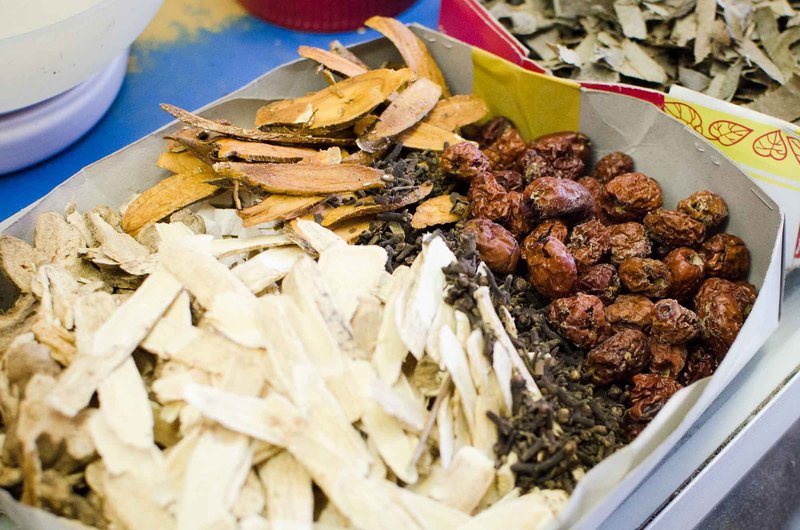
Chinese herbal medicine is the heart of what we do at Shallowford Herbs & Acupuncture Clinic. Dr. George Fan Xu, L.Ac., OMD, learned it in a family that has practiced it for three generations, and for many of the people who come to our Doraville clinic from Chamblee, Brookhaven and all over Atlanta, the herbal tea does as much of the work as the acupuncture needles.
If you’ve never had a Chinese herbal prescription, a bag of roots, bark, leaves and dried fruit can look a little mysterious. Here’s how it works, why it’s made just for you, and how to brew it at home.
Have a question first? Call (770) 455-8851.
What Chinese herbal medicine is
Traditional Chinese Medicine (TCM) has used plants, roots, seeds and minerals for well over two thousand years. Herbs are rarely given alone. They’re combined into a formula, where each ingredient has a role: some do the main work, some support them, and some balance the others or help the body take the formula in.
A formula is written for a pattern, not just a symptom. Two people with a cough, two people with sinus trouble, or two people with poor sleep may get very different herbs, because TCM sees different reasons behind what looks like the same problem. That’s the same thinking you’ll find in our post on allergies and sinus trouble.
Why your prescription is made just for you
At your visit, Dr. Xu asks about your health, sleep, digestion, energy and how you feel in hot or cold weather. He checks your pulse at both wrists and looks at your tongue. If you’re new to all this, our guide to your first acupuncture visit walks through it step by step.
From there he writes a formula for you and measures the raw herbs by hand into individual bags, usually one bag per day of tea. As you change, the formula changes too. At follow-up visits he may add an herb, take one out, or adjust the amounts.
That’s the main difference between a prescription and an off-the-shelf herbal product. A bottle from the store is the same for everyone who buys it. Your bag is made for you and adjusted along the way.
Why we still use raw herbs
Many clinics today use powdered or pill versions of herbs, and those have their place. At our clinic, we mostly prescribe the traditional way: whole, dried herbs that you cook into tea, or a “decoction.”
People in our family have prepared herbs this way for generations, and there are practical reasons we stick with it. Raw herbs let Dr. Xu fine-tune the amount of each ingredient for each person, and many practitioners consider a fresh decoction the most traditional and flexible form of an herbal prescription. It takes a little more effort at home, but most patients settle into a routine within a few days.
How to brew Chinese herbs at home
Dr. Xu will always give you instructions for your own formula, and you should follow those first. Some herbs need to be added early, added late, or soaked separately. As a general picture, though, brewing usually looks like this:
- Pick the right pot. A ceramic, glass, enamel or stainless steel pot works well. Avoid aluminum and cast iron.
- Soak the herbs. Empty one bag into the pot, cover with cold water by an inch or two, and let it sit for about 20 to 30 minutes.
- Bring to a boil, then simmer. Bring it up to a boil, turn it down low, cover, and let it simmer for the time Dr. Xu gives you, often around 20 to 30 minutes.
- Strain and save the herbs. Pour off the liquid into a cup or jar. Many formulas are cooked a second time with fresh water to get the most from the herbs, then the two batches are mixed.
- Drink it as directed. Most people split the day’s tea into two or three servings. Drink it warm unless you’re told otherwise.
- Store leftovers in the fridge. Gently rewarm it before drinking.
If your kitchen smells earthy for an hour, that’s normal. Some of our patients say they’ve come to like it.
What does Chinese herbal tea taste like?
We’ll be honest: it isn’t dessert. Many formulas taste bitter, earthy or a little woody. Some are surprisingly mild or slightly sweet, especially ones with jujube dates or licorice root.
A few tips patients find helpful:
- Drink it warm, not hot, and don’t sip it slowly for an hour. A steady few swallows is easier.
- Rinse your mouth with water afterward, or follow it with a slice of fruit.
- Ask before adding anything. A little honey is sometimes fine, but check with Dr. Xu first, since sweeteners don’t suit every formula.
Most people get used to the taste within the first few days.
Safety comes first
Herbs are real medicine, which is exactly why they should be prescribed by someone trained to use them. Always tell Dr. Xu about every medication and supplement you take, especially blood thinners, diabetes or blood pressure medicine, and let him know if you’re pregnant, trying to conceive, or nursing. Keep taking anything your doctor has prescribed, and don’t stop a medication without talking to them. If you notice a rash, stomach upset or anything unusual, stop the tea and call us.
FAQ
Where can I find a Chinese herbalist in Atlanta?
Our clinic is at 6021 New Peachtree Rd. in Doraville, right across from the Doraville MARTA station, a short drive from Chamblee, Buford Highway and the rest of the Atlanta area. See directions and hours.
Do I need acupuncture to get herbs?
No. Some people come only for herbs, some only for acupuncture, and many get both. Dr. Xu will suggest what fits your situation.
How long will I drink the tea?
It depends on what you’re treating and how your body responds. Some people need a short course, while long-standing problems usually take longer. Dr. Xu reviews your progress at follow-ups and adjusts the formula as you go.
Can I take Chinese herbs with my regular medicine?
Often, yes, but only after Dr. Xu knows everything you take. Some herbs and medications don’t mix, so bring a list to your visit.
Can I get powders or pills instead of raw herbs?
Ask Dr. Xu. Raw herbs are our usual approach, but he’ll talk through what makes sense for you.
Does acupuncture hurt?
Most people feel very little. Read what acupuncture needles really feel like.
Book a visit for Chinese herbal medicine
If you’ve been curious about Chinese herbal medicine, or you’ve tried store-bought herbs without much luck, we’d be glad to meet you. Learn more about Dr. Xu and our treatments, or visit our homepage.
Call Shallowford Herbs & Acupuncture Clinic at (770) 455-8851 to book your visit.
This article is for general education only and is not medical advice. Acupuncture and Chinese herbal medicine are not a substitute for diagnosis or treatment by your physician. Results vary from person to person. If you have a medical emergency, call 911.